A reformatory was an institution for “criminal” children, later known as juvenile offenders. Reformatories were designed to remove children from adult prisons, as well as to separate children who had committed offences from so-called “neglected” children. The name of this institution reflects the notion that, intercepted early enough, young criminals could be reformed. However, in practice, reformatories were used for children considered to need stronger discipline than those directed to other types of institutions or to foster care.
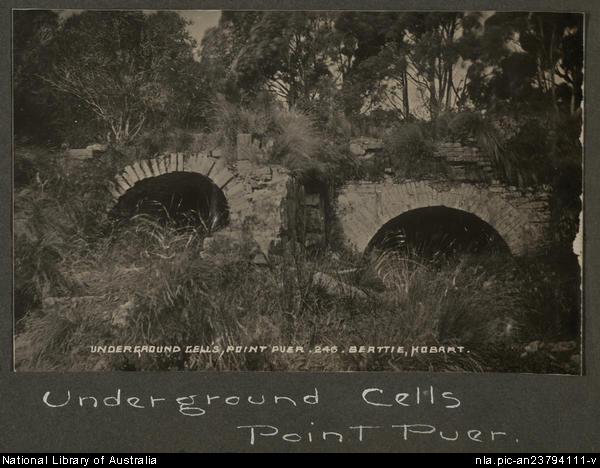
The first Australian reformatory was Point Puer in Tasmania which opened in 1834 (four years before the first reformatory in Britain, Parkhurst). Point Puer was situated on the Tasman Peninsula, near Port Arthur, the convict penal settlement. Point Puer was a reformatory for boys who were transported from Britain.
Reformatories were strictly gendered, with girls controlled by female staff, boys by males. Although they were supposedly designed to rescue children from the prison, reformatories mimicked many prison routines, justified by the need to maintain order.
An early reformatory in Melbourne was run by the Immigrants’ Aid Society, from around 1860. In the Colony of Victoria, juvenile offenders were originally the responsibility of the Penal and Gaols Department. In 1864, with the passage of the Neglected and Criminal Children’s Act, juvenile offenders came under the umbrella of the new Department of Industrial and Reformatory Schools.
In the mid nineteenth century, a reformatory was an institution for “criminal” children, as opposed to an industrial school, which was to provide training to “neglected” children. However the lines between neglected and criminal children were often blurred and the terms were used interchangeably. Poor children who had been charged with neglect often ended up sharing the same quarters as children who had been charged with criminal offences, and felt stigmatised as a result.
Victorian Departmental reports stressed that precautions were taken to separate “criminal from non-criminal”, and from 1887, there was separate legislation for neglected children and offenders in Victoria, with the passage of the Neglected Children’s Act and Juvenile Offenders’ Act. An editorial from the Age in 1890 demonstrates the continuing conflation of the terms “neglected” and “criminal”, and reveals the popular fears behind the reformatory as an institution:
so long as we have factors to reckon with as the death, the destitution, or the profligacy of parents, we shall always have children living in an atmosphere of crime and neglect, and, if left to themselves, growing up inevitably to swell the ranks of the depraved classes. It is therefore a matter of first importance to the whole community that this supply of criminals should be cut off at its very source.
David McCallum (2005) has pointed out that, under the Victorian 1890 Crimes Act, neglected children could be transferred from foster care into the reformatory, for an indefinite period at the discretion of the Minister. From 1900, these provisions also applied to Indigenous children. The Aborigines Board had the power to transfer “all suitable Aboriginal children, whether orphans or otherwise” to be “managed” by the Department of Reformatory Schools. Thus, on only the basis of negative reports from their guardians, children in foster care, or employed “in service” could be transferred to a reformatory until they reached the age of 18.
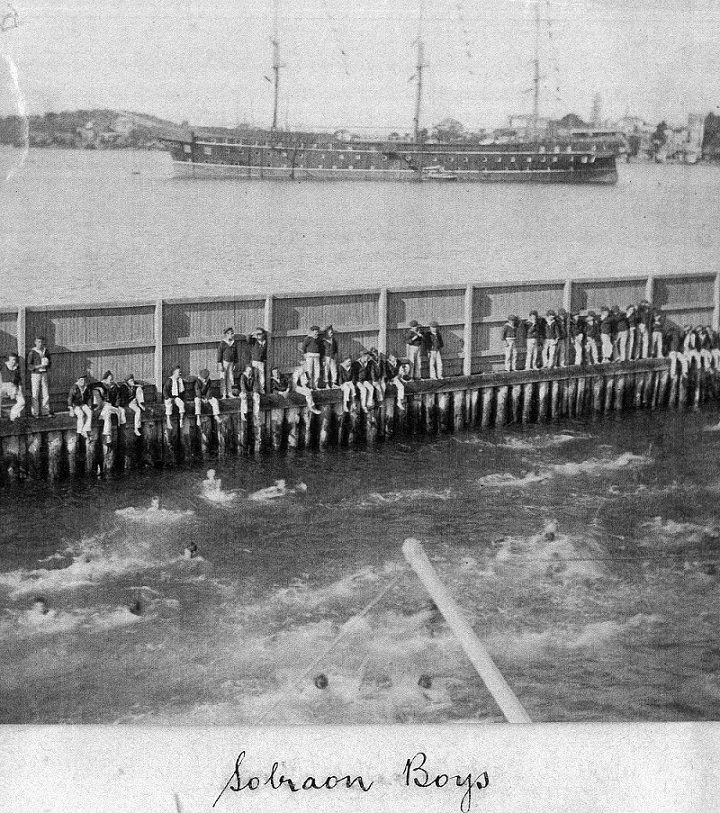
Some of the first reformatories were located on board ships. Victoria had a reformatory for boys on the former prison hulk, the HM Success (1868-1873). (The Department also had an industrial school on a ship, the Nelson.) Between 1865 and 1873 the former naval hulk the Sir Harry Smith operated as an industrial school and reformatory for boys.
The first reformatory in New South Wales was the vessel NSS Vernon, which was for boys. A second vessel, the Sobraon, also served as an industrial school. Girls attended Newcastle Industrial School for Females from 1869 to 1871, before they were moved to a new Industrial School, Biloela, on Cockatoo Island. The Shaftesbury Reformatory, for girls, was located at Watson’s Bay (1880-1904).
One of the first reformatories in Queensland was a prison hulk in the riverside Brisbane suburb of Lytton. In South Australia, the Destitute Persons Relief Act 1866-67 provided for the creation of the colony’s first reformatories and industrial schools. South Australia refitted the Fitzjames to be a boys’ reformatory hulk in 1880. The former Canadian ship was moored at Largs Bay. Boys were brought to the Hulk from Illfracombe Boys Reformatory, the Boys Reformatory, Magill and Magill Industrial School. In 1891 the boys were moved back to the newly renovated Boys Reformatory at Magill.
In New South Wales, reformatories were, in the first instance, an arm of the prison system but later moved to the province of child welfare administration. The Parramatta Industrial School became the main reformatory for girls, and Mt Penang was the main reformatory for boys. The Institution for Girls at Hay and the Institution for Boys at Tamworth were also reformatories.
In Tasmania, the language in legislation was around training, rather than reform. The colony passed the Training Schools Act in 1867. Training Schools were an attempt to separate children who were considered neglected from those considered to be delinquent. Neglected children were placed in an industrial school or the boarding out system, while the others were sent to a training school. In reality, the difference was not clear cut and children who were state wards because of neglect might be placed in a training school because they were difficult to manage or had absconded.
In Tasmania, the Boys’ Reformatory, run by volunteers, opened in the Female Factory at Cascades, South Hobart, in 1869. It provided an alternative to gaol for boys who were homeless or had broken the law. The boys were about school age. The Reformatory closed in 1876. The government established the Boys’ Training School in South Hobart in 1884, an institution for young male offenders. It was also on the site of the former Female Factory at Cascades, this time in Yard Five.
Ashley Home for Boys, in Deloraine, replaced the Boys’ Training School in 1926. It was a government run reformatory. In 1999, it became the Ashley Youth Detention Centre.
In Western Australia, the Industrial and Reformatory Schools Act 1893 amended the Industrial Schools Act 1874. The new legislation ‘allowed magistrates, instead of convicting a child’ to ‘send them at once to a Reformatory School’. The Industrial Schools Act 1874 only empowered the Governor to send a child to a Reformatory School after they had been convicted.
Queensland had the Industrial and Reformatory Schools Act 1865. The Queensland government ran a reformatory for boys at Westbrook from 1900 until 1994. It was run as a farm school for most of its years of operation. Religious reformatories in Queensland included the Good Shepherd Home for Girls, situated in Mitchelton, and the Riverview Training Farm, run by the Salvation Army.
Although many of Australia’s institutions for young offenders began as reformatories, in the mid twentieth century the language began to change and these places began to be called youth training centres, training institutions, and later, juvenile justice centres. This renaming reflected established changes – that the vast majority of children and young people under state control were not given custodial sentences and that this type of institution had more clearly become a youth arm of the criminal justice system.