


The Aboriginal Child Placement Principle (ACPP) was developed in the early 1980s and was incorporated into adoption and child protection legislation from 1983 onwards. In 2009 it was renamed the Aboriginal and Torres Strait Islander Child Placement Principle. The Principle is intended to guide child protection services to strengthen Aboriginal children’s connections with their family,…
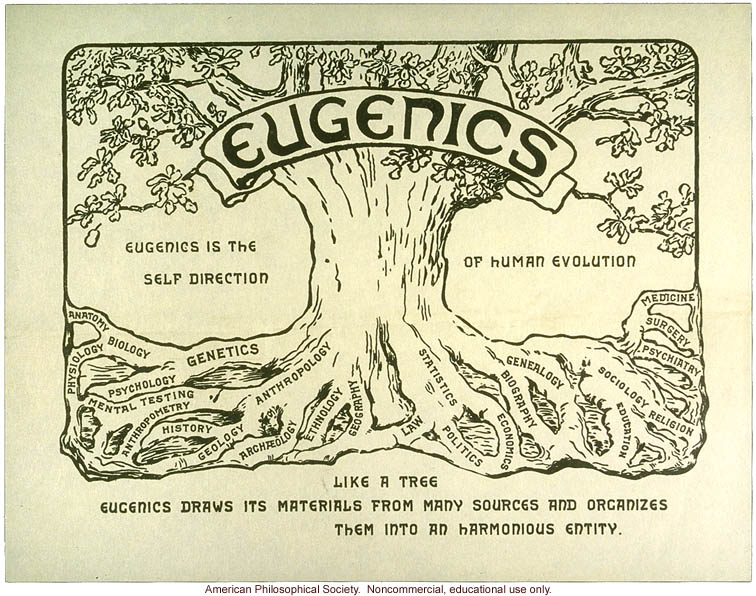
Eugenics was an influential doctrine popular from the late nineteenth to the mid-twentieth centuries. Eugenics refers to the philosophy and practice of selective breeding of humans with desirable (or “superior”) hereditary traits. While not discounting the role of environmental factors, it placed considerable emphasis on heredity in shaping an individual’s characteristics. The ideas within eugenics…
The Australian Institute of Health and Welfare defines adoption as “The legal process by which a person legally becomes a child of the adoptive parent(s) and legally ceases to be a child of his/her existing parent(s)”. In Australia, each state or territory has its own adoption legislation and its own policies and processes. In the…
Closed adoption refers to the practice of sealing an adopted child’s original birth certificate and issuing a new birth certificate when the child was adopted. This new certificate included the name of the child and their adoptive parents. The identity of the adopted child’s original parents was hidden. This practice meant that many people didn’t…
Homefinders were people who worked to find places for children who needed foster parents or apprenticeships. The term was used in New South Wales, and was borrowed from American charities. George Ardill of the Sydney Rescue Work Society used the term in his publication The Rescue, and it was used by other Sydney charities. The…
Schools for Specific Purposes were public schools for children with special needs that were set up by the New South Wales Department of Education. Sometimes they are referred to as Schools for Special Purposes. They operated within a number of state child welfare institutions. Their naming and classification has changed over time, but such schools…
Affiliation is a word used to describe the process of identifying the father of a child born to a single mother. Single mothers were obliged to name the father of their child if they wished to access government payments. They were also forced to ask the father for maintenance or child support. If her request…
City Mission refers to the missions run by various Christian denominations in urban and suburban settings. Many of the city missions established in nineteenth-century Australia continue to operate community services organisations in the 2010s. The London City Mission was founded in 1835, with a mandate to ‘extend the knowledge of the Gospel among the inhabitants…
Uncontrollable is a term used in child welfare legislation and in child welfare files. It was generally used by authorities to describe a child believed to be undisciplined. Being uncontrollable could be a reason for a child to be deemed neglected and made a ward of the state in court. Parents and guardians could declare…
Probation refers to children or young people being committed by the Children’s Court to a period of supervision by the child welfare department in their state or territory. In New South Wales, probation was introduced in 1905 as part of the Children’s Court system. It was a way of supervising children who had been charged…

Dec 17, 2025

Dec 18, 2024

Nov 15, 2024