


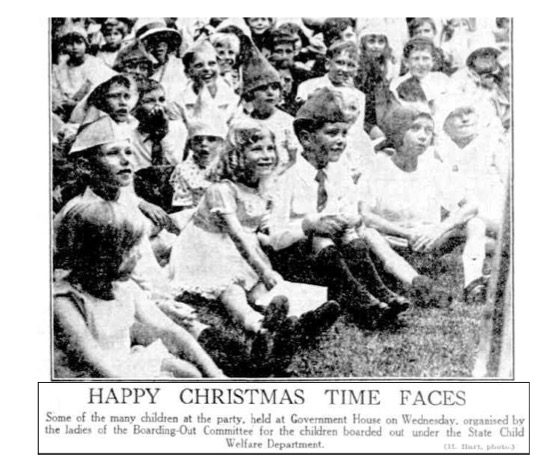
Boarding out was the term used to describe the placement of children and young people in foster care in private homes. Nineteenth century reformers advocated boarding out because it provided more of a family life than the big institutions. Under the boarding out system, government agencies paid foster parents a weekly fee – the boarding…
The child rescue movement was an outgrowth of the evangelical revival in England, it captured the imagination of many Australian philanthropists during the last quarter of the nineteenth century, leaving a particular mark on colonial and state child welfare services. Child rescuers argued that the existing orphanages and statutory organisations were too passive in their…
Infant Life Protection was a program that emerged in response to rising concerns about ‘baby farming’ in the late nineteenth century – this was the practice of infants, usually born to single mothers, being placed in private homes to be nursed and boarded, for a fee. There was a very high mortality rate for ex-nuptial…
Mental deficiency is a term that was commonly used to describe intellectual or developmental disability in the first half of the twentieth century. It was regarded as a disease, and the popular belief was that people who were diagnosed as ‘mentally defective’ needed to be segregated from the community, to receive special ‘care’ and treatment….
The Bringing them home report (1997) found that informal and formal foster care arrangements and holiday placements supposedly for a temporary period, were frequently the beginning of a permanent separation of Aboriginal children from their family and community. The Victorian resource guide Finding your story states that: ‘Whilst the informal placement of Indigenous children with…
The Convention on the Rights of the Child (CRC) is an international convention, setting out the civil, political, economic, social and cultural rights of children. The General Assembly of the United Nations adopted the Convention on the Rights of the Child on 20 November 1989 (the 30th anniversary of the Declaration of the Rights of…
An orphan is a child whose mother or father or both has died. Historically, in the context of institutional ‘care’, the term ‘orphan’ did not necessarily mean a child whose parents had died. It was most often used to describe a child whose parent/s were (or were judged to be) unable, for many different reasons,…
Dec 17, 2025
Dec 18, 2024
Nov 15, 2024