


Alinjarra was one of the cottages in the Salvation Army’s Hollywood Children’s Village, in Nedlands. From 1986 to January 1991, Alinjarra Cottage provided short term and emergency care for boys and girls in a family-type setting with cottage parents.
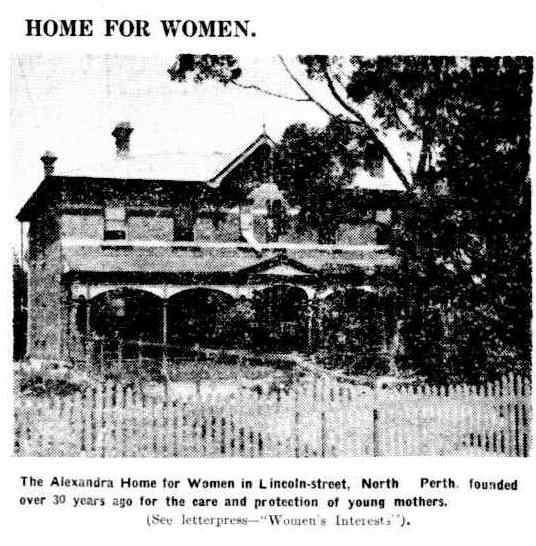
The Alexandra Home for Women was the new name given in 1916 to the House of Mercy in Highgate, Perth. The Alexandra Home was run by a private committee of management and continued primarily as a maternity home for unmarried mothers, with some married women also admitted. By 1950, it was known as The Alexandra…
The Albany Group Home was a government-run facility established in Albany around 1978. It operated for an unknown period, with some possible closures and re-openings. In 1996, the Albany Group Home provided emergency, short term and medium term accommodation for school aged children. It had closed by 2013.
Correspondence files, Class 5 (British Migrants) contains records created by the Department of Immigration and the Department of the Interior, dating from 1920 to 1957. It is held by the National Archives of Australia. This series contains correspondence files relating to the migration of British subjects to Australia, including the migration of children through Child…
The Correspondence files, class 1 (general, passports) is a series of records dating from 1892 to 1970 held by the National Archives of Australia. It contains records concerning the activities of the Commonwealth Department of the Interior from 1939 to 1945 and the Commonwealth Department of Immigration from 1946 to 1950. Some of the records…
Maternity Homes were institutions that provided residential accommodation to pregnant women, usually single women, and they often functioned (officially or not) as adoption agencies. Women gave birth in maternity homes attended by a midwife. Many maternity homes were also ‘rescue homes’ which tried to reform the young mothers. These institutions were sometimes known as lying-in…
The Inquiry into the Implementation of the Recommendations of the Lost Innocents and Forgotten Australians Reports, which began in 2008, was conducted by the Senate’s Community Affairs References Committee. Its report Lost Innocents and Forgotten Australians Revisited, was released in June 2009. In September 2008, the Senate referred the following matter to the Community Affairs…
The Overseas Children Scheme (Australian terminology), also known as the Children’s Overseas Reception Board Scheme (British terminology), was a program to evacuate children from Britain to various Commonwealth countries so that they could escape the German bombing during World War Two. A total of 577 children came to Australia as evacuees under this scheme. They…
The Overseas League was founded in London in 1910 by Sir Evelyn Wrench with the aim of strengthening relationships and fostering good will within the British Empire. It was based in England, and had branches across Australia. The Overseas League was involved in the migration of children from Britain to Australia, New Zealand, and Canada,…
Juvenile delinquency was a term used to describe the behaviour of children and young people who are committing criminal offences, or thought likely to commit offences, at a young age. This behavior could include vandalism, truancy, stealing, fighting, running away from home or being sexually active. Many children in institutions were labelled as delinquents, or…
Dec 17, 2025
Dec 18, 2024
Nov 15, 2024