


On 16 November 2009, the Australian Parliament issued an apology to Forgotten Australians and former child migrants. The Apology in November 2009 was an endorsement of Recommendation 1 from the ‘Forgotten Australians’ report of 2004, which read: That the Commonwealth Government issue a formal statement acknowledging, on behalf of the nation, the hurt and distress…
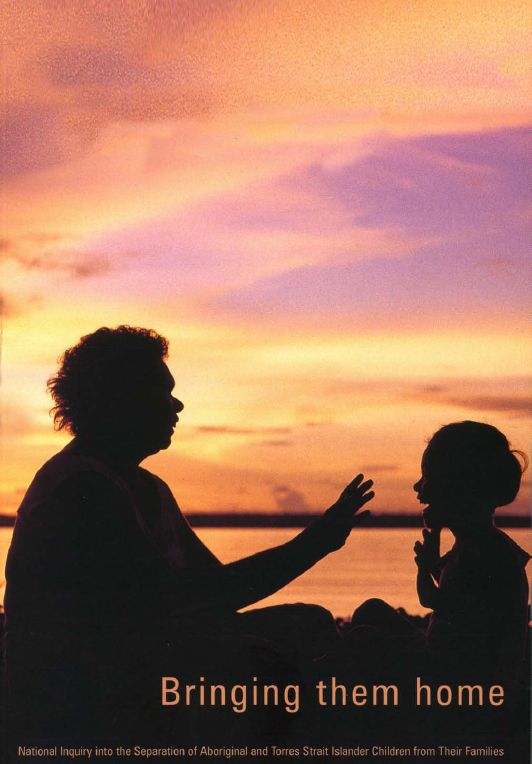
The National Inquiry into the Separation of Aboriginal and Torres Strait Islander Children from Their Families was established by the Federal Attorney-General in 1995. It was conducted by the Human Rights and Equal Opportunity Commission (HREOC). In April 1997, the Commission handed down the report, Bringing them Home: Report of the National Inquiry into the…
The Inquiry into Children in Institutional Care was referred to the Senate Community Affairs References Committee on 4 March 2003. This inquiry was directed primarily to those affected children who were not covered by the 2001 report Lost Innocents: Righting the Record, inquiring into child migrants, and the 1997 report, Bringing them Home, inquiring into…
Voluntary placement is a term to describe the practice of parents or relatives putting a child into a Home, outside of child welfare legislation. These children (sometimes referred to as ‘voluntary wards’, ‘non wards’, or ‘private children’) came into ‘care’ under informal arrangements, often due to economic difficulties or a family crisis that made it…
In May 1982, an inquiry began by the Senate Standing Committee on Social Welfare. The result of this inquiry was the report, ‘Children in Institutional and Other Forms of Care: a national perspective’ (1985). The Committee noted that little work had been done to date in this area, on a national basis. The Committee’s terms…
Holiday hosts looked after children from institutions for weekends or short stays during school holiday periods, so that staff employed at the children’s Home could take leave. The Senate’s ‘Forgotten Australians’ report (2004) noted that the use of holiday hosts was ‘often undertaken in an uncoordinated manner with expediency rather than child welfare being a…
Mothercraft describes the knowledge and skills required to care for babies and young children. Mothercraft nurses were trained and specially qualified in maternal and infant care. Many of the institutions for children in Australia in the twentieth century were also mothercraft nursing training schools. Qualifying as a mothercraft nurse involved months of study and training…
Neglected child was a term used in Australian child welfare legislation from the mid nineteenth century. Over time, the ways of describing a neglected child changed but the purpose of the definition remained constant: children who were found to be neglected could be brought into the child welfare system and placed in institutions or foster…
Illegitimacy was the status given to children born as a result of an out of wedlock, or ex-nuptial, pregnancy. The term illegitimate replaced the even more pejorative term ‘bastard’ to describe these children. The social stigma attached to illegitimate children meant that many mothers relinquished or were forced to relinquish them or children were placed…
Baby farming is a term that first appeared in the British press in 1867 to describe the practice of placing infants in private homes to be nursed and boarded, for a fee. Ideally, the infant was breastfed by a wet-nurse but if this was not possible, infants were fed artificially with cows’ milk. This was…
Dec 17, 2025
Dec 18, 2024
Nov 15, 2024