


In 1951, a British Home Office official named John Moss inspected and reported on Australian and New Zealand institutions where British child migrants were living. Moss spent July-December 1951 travelling around Australia and to New Zealand, inspecting institutions and making recommendations. His report, known as the Moss Report, was submitted to the British government in…
The Salvation Army Australia Museum holds historical memorabilia, photographs and records related to the operations of the Salvation Army in Australia, including material relating to some of the children’s Homes it ran. The Museum also holds a digitised and searchable complete set of the Salvation Army magazine, War Cry. The Museum is located in Melbourne,…
Salvation Army Australia, Records of Homes in the former Southern Territory is a collection of records relating to former residents of Salvation Army institutions in South Australia, Tasmania, Victoria and Western Australia. The Salvation Army in these states was known as the Southern Territory from 1921 until 2018. Care Leavers who apply for access to…
This series consists of immigration policy files relating to the assimilation, welfare and education of migrants. File subjects include, for example, child-youth migration schemes, Children’s Homes taking migrant children, Acts relating to immigration, migrant organisations, transport, sponsorship schemes, housing and accommodation, conferences, refugees and restricted immigration policy. Access Conditions The majority of records in this…
The Salvation Army Australia Museum in Melbourne collects historical records and memorabilia about the Salvation Army in Australia. This includes memorabilia and photographs related to the Homes run by the Salvation Army in its Southern Territory (from 1921 until 2018, the Salvation Army was divided into two territories. The Southern Territory comprised South Australia, Tasmania,…
The Convention on the Rights of the Child (CRC) is an international convention, setting out the civil, political, economic, social and cultural rights of children. The General Assembly of the United Nations adopted the Convention on the Rights of the Child on 20 November 1989 (the 30th anniversary of the Declaration of the Rights of…
An orphan is a child whose mother or father or both has died. Historically, in the context of institutional ‘care’, the term ‘orphan’ did not necessarily mean a child whose parents had died. It was most often used to describe a child whose parent/s were (or were judged to be) unable, for many different reasons,…
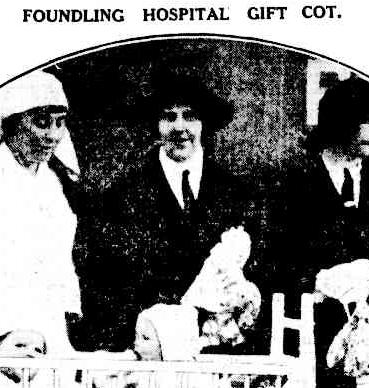
The Wattle Day Appeal was an annual fundraising event, used to raise funds for children’s institutions and other charitable organisations. The annual Wattle Day Appeal began in 1910, with Wattle Day events held in New South Wales, Victoria and South Australia. Over the next few years, Wattle Day events were also held in Queensland and…
The Aborigines Welfare Ordinance 1954 (Act no. 8/1954) was Commonwealth legislation, established to ‘provide for the welfare and control of Aborigines, particularly those at the Wreck Bay reserve’ (Jervis Bay Territory). The 1954 Ordinance followed the lines of the New South Wales Aborigines Protection Acts, 1909-1943 and was approved by the Aborigines Welfare Board of…
The Juvenile Offenders Ordinance 1941 (Act no. 11/1941) was Commonwealth legislation that allowed for children from the ACT to be placed in NSW institutions. It provided that a court in the ACT may commit a person under the age of eighteen to a NSW institution, in accordance with the Neglected Children and Juvenile Offenders Act…
Dec 17, 2025
Dec 18, 2024
Nov 15, 2024